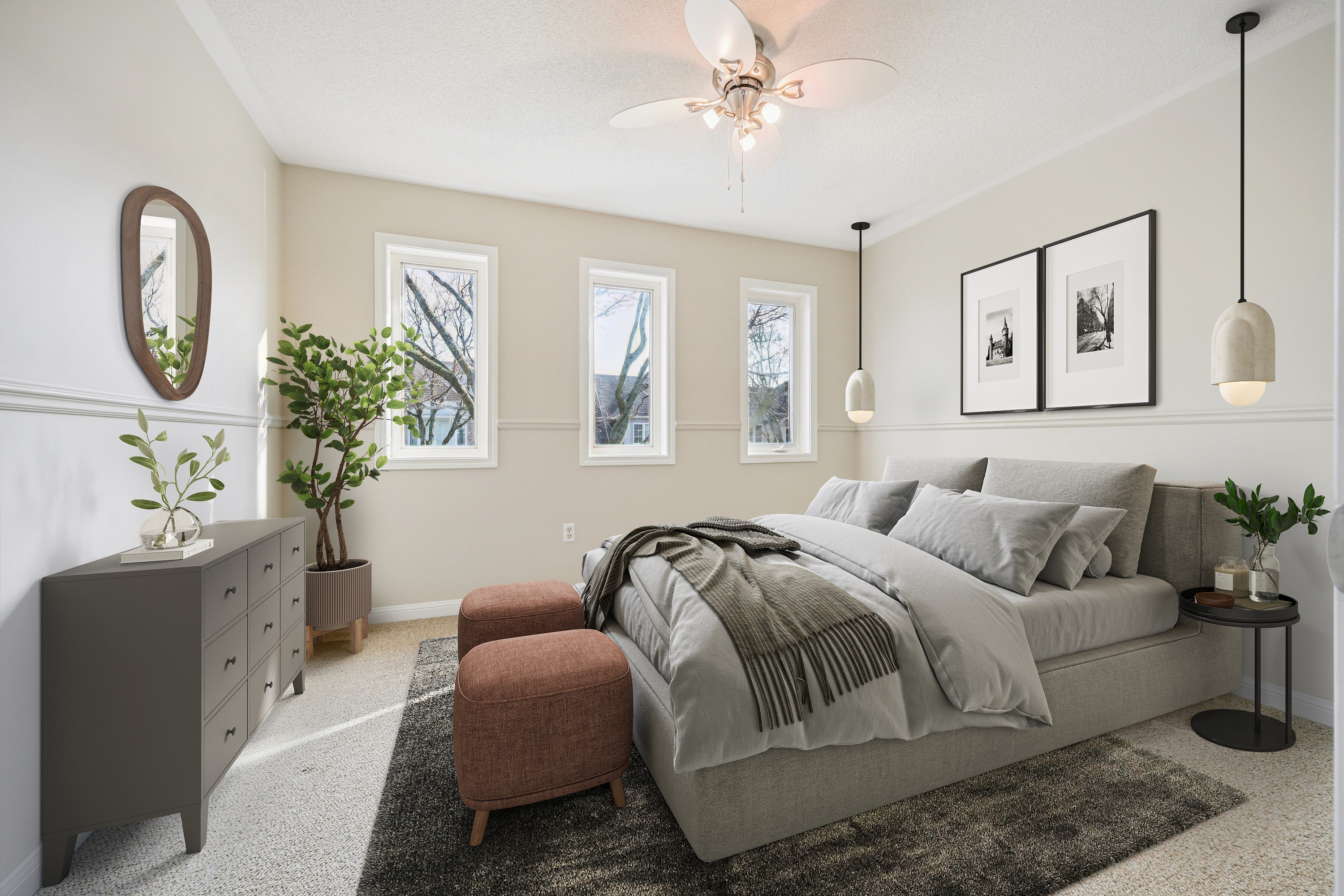
Vacant rooms and basic photos often make strong properties feel forgettable online. Virtual staging real estate software promises fast, affordable transformations, and many agents and investors are already adding AI tools into their marketing mix. Used well, it can speed up your workflow, boost engagement, and help you test styles with minimal effort. Used blindly, it can create strange details, off‑brand visuals, and misleading expectations. In this article, we’ll walk through what AI virtual staging can realistically do, where it still falls short, and how to combine software with expert input for better results.
What is AI virtual staging software?
AI virtual staging software uses artificial intelligence to automatically place realistic furniture, decor, and lighting into photos of empty or outdated rooms. Instead of physically staging a property, you upload interior images and choose a style; the software then generates furnished versions ready for listings, brochures, or social.
For real estate professionals, this means:
Faster turnaround: AI‑powered image tools can reduce editing time by up to 90% (Artsmart).
Stronger impact: Properties marketed with AI‑driven tools have seen sales increases of around 22% (All about AI).
Better buyer connection: 82% of buyer’s agents say staging helps buyers visualize a property as their future home (NAR).
AI virtual staging brings these benefits to more listings by lowering the time and cost barrier compared to traditional staging.
Read more: 2026 Peak Season: Scale with real estate photo editing outsourcing
What AI Virtual Staging CAN Do
1. Deliver Instant or Near‑Instant Turnaround
AI tools can generate staged versions of a room in minutes instead of hours or days. This speed is particularly useful when:
You are working to tight deadlines or launch dates
You need quick visuals for pre‑marketing, internal approvals, or concept previews
You want basic staging on lower‑value or lower‑priority listings without delaying the campaign
When used as part of a clear workflow, this instant output helps keep listings moving without waiting on long design cycles.
2. Keep Costs Low and Predictable
Most virtual staging real estate software is priced on low per‑image fees or flat subscriptions. This structure:
Makes virtual staging accessible for budget‑conscious agents and small investors
Helps teams forecast marketing spend more accurately
Encourages staging on more listings, not just premium properties
By reducing both time and direct costs, AI staging can be a practical option for everyday inventory, rentals, and entry‑level properties.
3. Generate Hyper‑Realistic Furniture (Under Ideal Conditions)
In clean, well‑lit rooms shot from standard angles, modern AI can create furniture and decor that look highly realistic. It tends to perform best when:
Walls, floors, and windows are clearly visible
The room is free of clutter and heavy distortion
Lighting is even, without extreme shadows or mixed color temperatures
Under these conditions, AI can generate convincing:
Sofas, beds, and dining sets
Side tables, rugs, and shelving
Lamps, wall art, plants, and small decor
These results can be strong enough for online listings and social, especially when you need a quick, cost‑effective solution.
4. Enable Instant Re‑Styling and Experimentation
AI virtual staging makes it easy to test different looks without re‑shooting or re‑designing from scratch. You can quickly:
Switch between Scandinavian, modern, industrial, coastal, or other styles
Try different color schemes and furniture densities
Explore which style best fits the property, neighborhood, and target buyer
This flexibility is valuable for agents and photographers who want to align visuals with specific segments, such as young professionals, families, or downsizers.
5. Improve Listing Clicks and Engagement (When Used Well)
Furnished, warmer interiors are more inviting than empty rooms, and AI staging can help you get there quickly. When the output is realistic and on‑brand, it can:
Make thumbnails stand out in crowded search results
Increase click‑through, saves, and time spent viewing the listing
Support better performance on social campaigns and email marketing
General visual marketing data consistently shows that attractive images drive higher engagement and conversion. AI virtual staging gives you more opportunities to present each property in a warm, livable way, provided the images still look credible and aligned with the real space.
Read more: 5 Real Estate Photo Editing Company Worth Considering In 2026
What AI Virtual Staging CANNOT Do
1. Perfect Detail Rendering Every Time
Even strong virtual staging real estate software is not flawless. You will still see:
Odd shadows or lighting that does not match the room
Floating or misaligned furniture
Distorted legs, warped edges, or strange surface textures
These issues are more common in rooms with complex lighting, reflective surfaces (glass, mirrors), or unusual shapes, and they usually need human review and correction.
2. Deep Customization and Nuance
AI is good at generic styles but struggles with precise, brand‑level control. It often has difficulty with:
Strict brand style guides, defined color palettes, or signature looks
Matching specific furniture SKUs or a developer’s standard packages
Control is also limited when it comes to:
Exact placement of each piece
Balancing decor hierarchy and negative space
Deciding how “full” or minimal a room should feel
These fine decisions shape how professional and on‑brand the final set appears.
3. Strategic Staging to Match Target Buyers
AI does not understand your local market, price band, or property story. It cannot:
Decide which rooms to highlight for families vs. investors vs. downsizers
Choose layouts that emphasize work‑from‑home, entertaining, or multigenerational living
Prioritize views, outdoor access, storage, or other features that matter in your area
Without this strategic layer, images may look attractive but fail to speak directly to the most likely buyers for that listing.
4. True Architectural Adaptation
Complex architecture is still challenging. AI often struggles with:
Sloped or vaulted ceilings and attic rooms
Large open‑plan spaces that combine living, dining, and kitchen
Odd nooks, tight corners, or mixed‑use layouts
The software may place furniture that “fits” in the image but would feel cramped, unsafe, or impractical in real life. This can create confusion at inspections when buyers compare photos with the actual space.
5. Multi‑View and Whole‑Property Consistency
Most tools work on a single image at a time and do not manage a full listing as a unified project. As a result, AI cannot reliably:
Keep furniture styles, colors, and finishes consistent across all rooms
Maintain continuity from one angle of the same room to another
Build a coherent visual story from entry to living to bedroom to outdoor areas
This image‑by‑image approach can lead to sets that feel disjointed or off‑brand when viewed as a complete listing.
AI Staging vs. Human-Driven Virtual Staging
1. Speed and Cost
AI virtual staging software is built for speed and volume. It delivers staged images in minutes at low per‑image or subscription pricing, which works well for everyday or lower‑tier listings.
Human‑driven virtual staging takes longer and costs more per image, but remains far below the cost and logistics of physical staging, especially for larger portfolios.
In practice:
AI: very fast, very affordable, ideal for routine or time‑sensitive jobs
Human: slower, higher touch, best reserved for key or brand‑critical listings
2. Quality, Realism, and Brand Control
AI can sometimes produce excellent, hyper‑realistic results, but quality may vary from image to image, and control over details is limited. Subtle issues with shadows, reflections, proportions, and style alignment often slip through.
Human designers can actively manage these details, follow your brand guidelines, and keep the entire set visually consistent.
Human‑driven staging adds:
Reliable realism and proportion
Precise adherence to brand palettes and style rules
Consistent look and feel across all photos in a listing
3. Strategy and Storytelling
AI generates images, but does not work with a marketing strategy. It cannot decide what matters most to your buyers or how to present the property narrative.
Human virtual stagers bring intent: they choose layouts, focal points, and styles that highlight lifestyle and key selling features for specific audiences.
Only human designers can:
Stage with specific buyer segments in mind
Emphasize views, flow, workspace, or family zones
Build a clear story from the first image to the last
4. Scalability and Workflow Integration
AI tools are useful as quick add‑ons: they handle ad‑hoc staging jobs and simple requests without much setup. However, they typically sit outside a broader visual pipeline.
Expert partners like Esoft are built to integrate virtual staging into your full media process, alongside photo editing, floor plans, and video, while maintaining consistent standards at scale.
For growing teams, this means:
AI: great for fast experiments and small tasks
Professional partners: better for end‑to‑end workflows and high, ongoing volumes
Read more: Why Photography Companies Choose Real Estate Photo and Video Editing Services
The Best Approach to Utilize AI Power in Virtual Staging
1. Use AI Virtual Staging Software for Drafts and Lower‑Impact Listings
AI virtual staging real estate software is strongest when you use it as a fast, flexible first step rather than the final word. It works especially well for:
Entry‑level rentals and lower‑budget sales
Internal previews for owners, developers, or project teams
Quick concept tests on different layouts or styles
This is ideal for agents and photographers who want to experiment with Scandinavian vs. modern vs. coastal looks, or test how furnished images perform, without committing to a full design process on every listing.
2. Rely on Professional Virtual Staging Services for Key Listing
When a property carries more brand weight or higher expectations, human‑driven virtual staging becomes essential. Professional services are better suited for: Luxury homes and penthouses; brand‑critical listings for major agencies or franchises; new developments and off‑plan projects; builder and investor portfolios used repeatedly in marketing.
Human designers can:
Refine room layouts so they make sense in real life
Choose styles that match your brand and target buyers
Maintain consistency across all images in the listing
Check realism so buyers are not misled by the visuals
This is where virtual staging becomes a strategic marketing tool,
3. Combine AI Power With Expert Oversight
The strongest approach often blends both AI speed and human judgment. A practical workflow looks like this:
Use AI to quickly generate first drafts or multiple style options
Have a professional team review the outputs, then:
Select the most suitable versions
Fix errors (floating furniture, odd shadows, scale issues)
Improve realism and alignment with your brand
Ensure consistency across all rooms and views
The result is a faster, more efficient pipeline with higher confidence in the final images, and fewer surprises when buyers walk into the property.
Esoft - Expert Virtual Staging for Real Estate Pros
Esoft brings more than 20 years of real estate visual experience and a hybrid AI–human workflow to virtual staging. We use AI where it adds speed and efficiency, then have specialist designers refine every detail for realism, strategy, and brand alignment. This approach helps you move fast without sacrificing quality on important listings.
Our virtual staging services include:
Residential Staging
Commercial Staging
360 Panorama Staging
With our hybrid model, AI helps generate options quickly, while our human team selects the best directions, corrects errors, ensures realistic proportions and lighting, and keeps every image coherent across the full listing.
Conclusion
AI‑driven virtual staging real estate software is powerful for speed, cost control, and rapid style experiments, especially on everyday or lower‑impact listings. But it still falls short on perfect detail, deep customization, buyer‑focused strategy, and whole‑property consistency. The strongest approach is a hybrid: use AI for drafts, then rely on expert designers to refine layouts, ensure realism, and align staging with your brand and target audience. If you want a hybrid AI–human partner to handle virtual staging with confidence, contact us!
Related Blogs

Real Estate Photography Editing Services For Luxury Listings, What's The Difference?
Photo Editing
Virtual Staging Real Estate Software: What AI Can Do Vs. What It Can’t
3D Visualization

Photography Editors Tips: How To Fix Bad Weather In Photos
Photo Editing

2026 Popular Services & Add-Ons Demand In Real Estate Photo Service
Photo Editing





Linh Phan
Content Strategy Executive
No Spam, Just Updates
Our fresh blogs provide technical and industrial information that helps strengthen your business. Sign up to be the first to receive the new updates