When it comes to real estate photography, consistency and scalability matter just as much as creativity. One of the most reliable techniques that checks both boxes is 5 exposure bracketed shooting with ambient exposures (also referred to as 5 exposure HDR photo or 5 exposure HDR bracketing in this blog). It’s nothing new but a tried and trusted real estate photography technique. Its relevance is growing as property design, lighting, and editing technology evolve. In this blog, we’ll explore why HDR photography is the muse of the future and why 5 exposure is better than 3 and 7.
1. Why Today’s House Lighting Systems Make HDR Photo Easier
Considering the average family home, your end client (real estate agent) is most commonly looking for images authentically representing what it feels like to be standing on their property. Using only ambient light can cut it and can show the true representation of the actual interior atmosphere.
Home design has changed over the years to invite more lighting to the space, making HDR interior photography reach closer to an authentic, natural feel. It gets cooler in color temperature as people prefer softer, more subtle lighting. Additionally, people are building houses and apartments more with natural and artificial lighting in mind and how lighting will benefit that space while furnishing their homes with more neutral, lighter, and brighter colors.
All these factors bring an easier experience for the photographer and for the editor to work on a HDR photo. Almost gone are the days of photographers coming back with very dark yellow-looking files and editors crying correcting the color. In other words, the development of domestic lighting systems has created many favorable conditions for professional real estate photography.
2. Why HDR Photo Works for Middle Mass Residential Real Estate Market
Middle-end market area, where the bulk of listed properties stays, is where you can utilize a 5-exposure HDR photo. Why? First, with the highest number of properties, you can secure a wide addressable market size. This means you would have more agents to serve, and more houses to shoot. And scaling up with a large production volume requires your input to be as consistent as possible, implying the 5-exposure bracketing approach is the most effective choice.
Compatibility-wise, 5 bracketed HDR photo exposure best suits this market. For a high-end market with luxury properties, your clients should be publishers, architects, and builders that demand strong photo quality. That means each photo typically requires more than 5 exposures with the use of flash ambient. It’s not rare to find photographers that should have 20 to even 30 exposures.
The income per property for this market is surely higher than that of the middle-end market but its market size is not as large. On the other end of the spectrum, in the lower-end market where low-value residential rental properties (Airbnb) are, you typically shoot single exposure (either with flash or without) to remain cost-effective.
3. How 5 Exposure HDR Photo Outperforms 3 and 7 Exposure
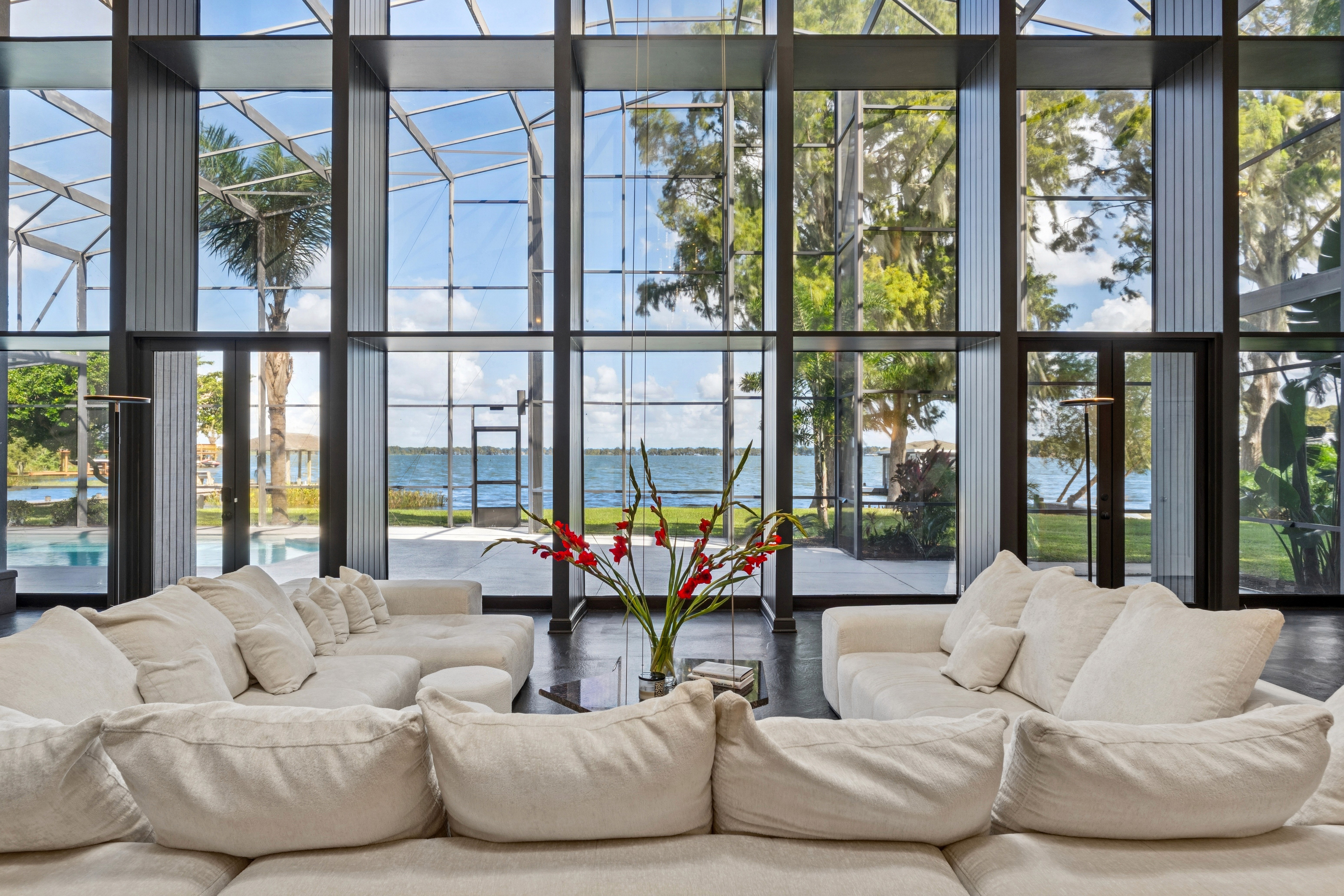
A sample of 5 exposure HDR photo edited by Esoft
Real estate HDR photography is all about capturing the full dynamic range of the property scene. Most of the time, photographers can nail that with just 3 exposures or even 7 or 9 exposures, depending on the number of stops they are using.
At first glance, 3 exposures may seem efficient. It’s quick to shoot, keeps file sizes smaller, and reduces upload and processing times. But the downside is that three brackets don’t always capture the full range of light, especially in high-contrast interiors such as a living room with bright windows or a kitchen with dark cabinetry. The result? Editors have less data to work with, which can increase the risk of blown-out highlights, muddy shadows, or an overall lack of balance in the final HDR photo.
On the other end of the spectrum, some photographers opt for 7 or even 9 exposures. This approach certainly ensures maximum data capture, giving editors every possible detail in both the brightest and darkest areas. However, in practice, it’s overkill. Shooting 7 exposures significantly slows down the photographer on-site when multiplied across dozens of photos per room and per property. It also creates larger file sets that must be uploaded, downloaded, and stored — increasing internet usage and overall workflow inefficiency. The quality gain doesn’t always justify the operational cost, particularly when scaling a business.
This is where 5 exposure HDR photo hit the sweet spot. It hits the perfect balance between data capture and efficiency. With 5 brackets, photographers get enough flexibility to cover difficult lighting conditions without overshooting. For beginners, it’s a safety net and they don’t have to worry about missing key exposure data. For experienced photographers, it provides consistency and peace of mind in fast-paced environments where mistakes can be costly.
From an editing perspective, 5 exposures also provide a clear advantage. Even though editors rarely use all 5 frames in the merge, having those extra options gives them better control over highlight recovery and shadow detail. Instead of forcing a “make do” approach with 3 exposures or sorting through excessive data from 7, editors can work faster and more effectively with just the right amount of information.
In terms of workflow, the benefits are even more evident at scale. A team of photographers shooting 5 brackets per HDR photo can move through properties efficiently, keep file sizes manageable, and deliver consistently high-quality input for post-production. The process is standardized across different property types, making it easier to train new photographers and maintain quality control.
Considering these, 5 triumphs!
4. HDR vs. Flash: Why HDR Photo is Simpler to Scale
No one can deny the value that flash brings to real estate photography. It offers superior light control, reduces color casting, and creates vibrant, magazine-style images that stand out. In both real estate post-production and production, flash provides precision that ambient light alone cannot always achieve. However, there’s a trade-off. Flash requires extra gear, extra setup time, and an ongoing investment in equipment maintenance. For growing teams, this cost compounds quickly.
Beyond cost, the real challenge lies in mastering flash itself. Using off-camera flash effectively is an art form that takes years to refine. Photographers need to learn how to balance flash with ambient light, position it correctly for each room, and sculpt the space without creating unnatural shadows.
For a small team of photographers, producing consistent inputs with flash is achievable. But when it comes to scaling the business, it can be hard to train a larger pool of photographers, say 30 to 40, to get the hang of flash, let alone to get them to produce consistently high-quality input together. Each person’s understanding of light can differ, and even small variations in technique can lead to big inconsistencies in the final output.
On the other hand, it’s easier to master shooting a HDR photo. HDR real estate photography follows a super straightforward approach. The camera setting abides by certain tried and trusted rules, workable in most cases. With that, all photographers need to master is the camera angle or the composition. This process can be brought to an online learning platform, making training an automated effort-saving work. That’s why, while flash has undeniable artistic value, HDR is simply the smarter choice for companies looking to grow without compromising quality.
| Featured blog: Camera setup for HDR real estate photography
5. How AI Is Transforming HDR Photo Editing
The development of software and apps that automate the HDR bracketing process has made the production of HDR photo much easier than in the past. Back then, HDR editing meant that editors had to manually align exposures, balance highlights and shadows, and correct color inconsistencies. While effective, it was repetitive and time-consuming when dealing with large volumes of photos across multiple properties. Today, automated HDR processing software can handle much of that work instantly, giving editors a clean base image to refine rather than starting from scratch.
What’s even greater is that top real estate photo editing companies are now developing automated editing processes using artificial intelligence. While some companies develop AI to process single exposure, companies like Esoft have built multiple (5) exposure models to edit HDR photo, which results in faster turnaround time and more consistent quality. It allows the editing companies themselves to spend more time on quality correction tasks demanding human attention. Thanks to that, photography companies can comfortably scale their production up while maintaining a high level of quality consistency and fast delivery.
| Featured service: Esoft’s Photo Enhancement Service
From the photographer’s perspective, this advancement means scalability. A team no longer needs to worry about whether post-production can keep up with rising shooting volumes, the AI backbone ensures that edits remain fast and uniform, regardless of how many files are being processed. Businesses can take on more clients and maintain service reliability without being limited by editing capacity.
Looking ahead, the technology will only continue to advance. As AI models get smarter, photographers and media companies will have the flexibility to choose whether to use AI to partly speed up only certain steps or fully process your bracketed files with human oversight like what we do here at Esoft. This adaptability ensures that as client expectations shift and business models grow, real estate photography companies can stay agile and competitive.
6. Conclusion
So, if you’re running a photography business looking to grow your production and your team most effectively and efficiently, 5-exposure bracketed HDR photo shooting with ambient exposures is the best choice for your team. Considering the size of the market you want to approach, the development of a house lighting system, the ease to project a consistent shooting model on a large base of photographers, and of course the development of AI which enables an easier editing process, HDR photo is for sure your optimal choice.
| Want to learn more about HDR? Contact us to talk with Esoft’s photo experts today!
Related Blogs



Linh Phan
Content Strategy Executive
No Spam, Just Updates
Our fresh blogs provide technical and industrial information that helps strengthen your business. Sign up to be the first to receive the new updates